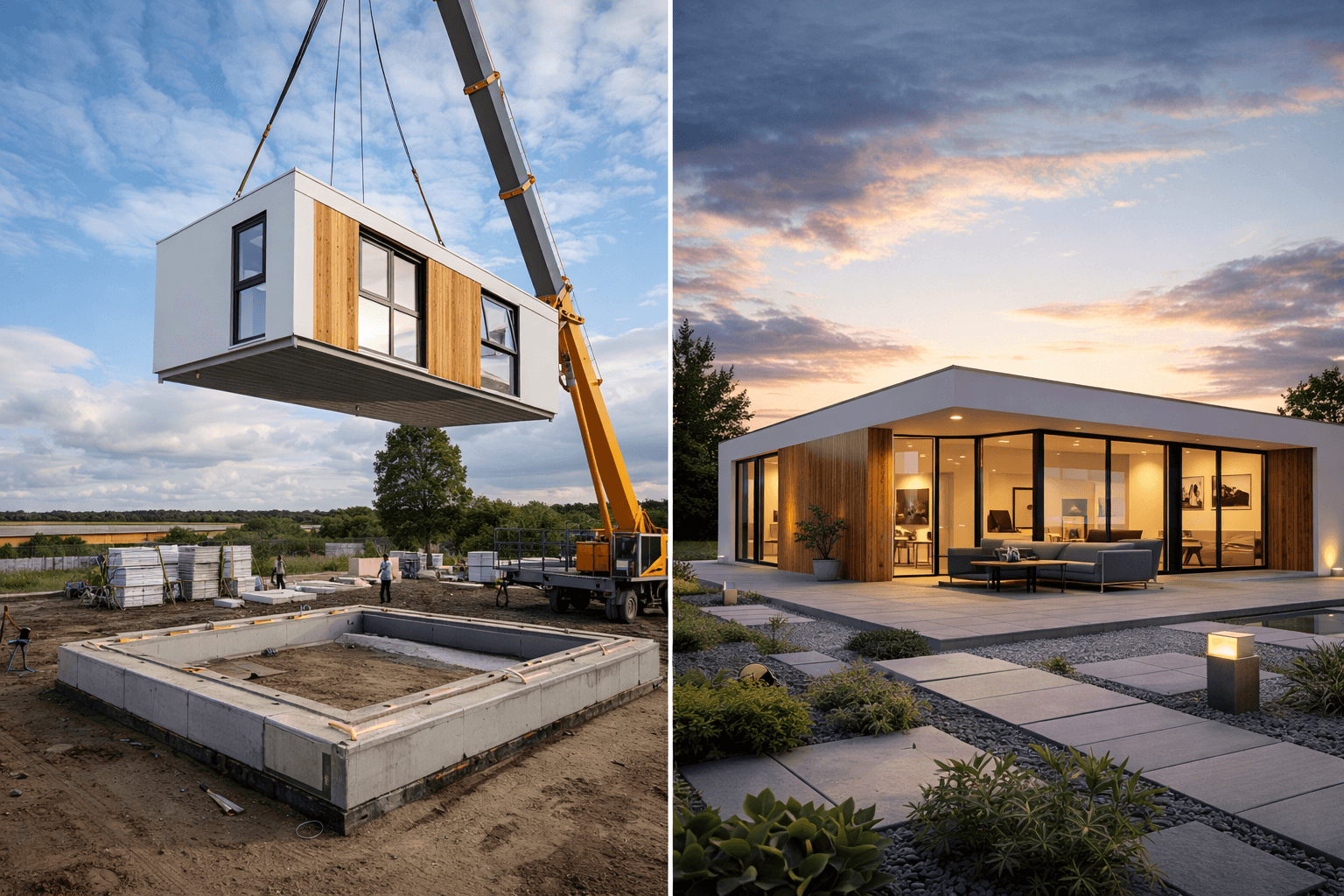
Industrialized housing is beginning to establish itself in Spain as a real alternative within the residential market. For years it was a marginal, almost experimental option, but in recent cycles its growth has clearly accelerated. Today we no longer speak of a future trend, but of a model that is advancing to respond to some of the sector’s major challenges: lack of supply, excessively long construction timelines, and rising costs that are increasingly hard to absorb.
This momentum is not accidental. Institutions are betting on industrialization as a way to produce housing more efficiently, relying on innovation, digitalization and new construction systems. The goal is clear: to build more, in less time and with greater quality control, without abandoning sustainability and energy-efficiency criteria that are already essential in any responsible real estate project.
From the buyer’s or investor’s point of view, industrialized housing is especially attractive because of its predictability. Tighter timelines, more controlled processes and reduced uncertainty during execution provide peace of mind in a context where many decisions are made under pressure. In addition, the use of new materials and techniques enables progress toward more efficient homes, with a smaller environmental footprint and better long-term energy performance.
However, it is important to emphasize one key aspect: an industrialized home is, in every respect, a home, and as such must comply with the applicable urban planning regulations. In the Valencian Community, the legal framework is defined by regional legislation, but it is the municipalities that set the specific building conditions in each town. This means not all plots are valid nor do all industrialized typologies automatically fit any parcel of land.
Before acquiring a plot for this type of project, it is essential to know the municipal urban planning in detail. Land classification, permitted uses, buildability, massing, setbacks, or even certain aesthetic criteria can condition — or prevent — the feasibility of the intended dwelling. Ignoring this prior phase can translate into delays, cost overruns or projects that never materialize.
At Alma Homes & Investment we believe that innovating also means doing things right from the start. Accompanying our clients means helping them make informed decisions, analysing the legal and urban-planning feasibility of each operation and anticipating scenarios before committing to an investment. Because the future of housing lies in new construction models, yes, but always with legal certainty, long-term vision and a deep knowledge of the territory where it is built.